Saturday, August 23, 2014

Writer’s Dilemmas

Many people have misconceptions about what a writer’s life is like. Most people think that writers make a lot of money. According to research by author, Robin Lee Hatcher, only about 1% of novelists are able to support themselves from their publications. Most are married to the breadwinner or work some other job.

Lisa Samson has had numerous successes as an author, but she recently announced she is leaving the field. She wrote, "The publishing world has changed drastically since I first set pen to paper almost exactly twenty-two years ago on August 8, 1992. Back then, you could just be a novelist.... The author has become increasingly responsible for marketing, publicity, and that platform I mentioned earlier. I'm simply not that kind of writer. I write, create, mull, think. write some more, go look in the fridge, and am not interested in nor gifted for the new responsibilities and I never have been. So, in essence, I'm a lousy person to publish in this new world. I fall down on the job when half of my job isn't writing. In other words, what is now required of an author is something I'm neither equipped for, nor willing to do. I write. That's it." As Lisa explained, today authors have to market and sell their books. They have to establish a platform with social media and websites. And if their first book doesn't sell well enough, there won't be a second one published.

On top of all this, publishers are paying less money. Lisa explains it this way: "I was recently offered a contract that was insufficient for me to support my family. A real step down from the previous one.... it was severely disappointing to have worked faithfully for two decades only to have your work go down in value to that point." So, when you hear of an author, don't assume they're raking in the money. Instead, know that most likely they're putting in hours and hours of hard work with little pay.
__________________________________________


Friday, August 22, 2014

What Was Boone, NC First Called?

Another interesting fact I found when researching my Appalachian Roots Series is that Boone was first called Councill's Store. The Councill family established a store early in the history of the area, and, by 1835, the store already included a post office. The community grew more quickly than most others in the area, and the lumber industry aided in this growth. At this time, the village was still part of Wilkes County. In 1849, the new county of Watauga was formed. Councill's Store, renamed Boone after the explorer, Daniel Boone, who had had a hunting cabin there, became the county seat.

Even having many relatives in Watauga County and graduating from Appalachian State University in Boone, I didn't know that Boone had first been called Councill's Store. This information enters into the first novel in the series, Cleared for Planting. By the last  books, Sown in Dark Soil, Uprooted by War and Transplanted to Red Clay, the town is called Boone.
___________________________________


Thursday, August 21, 2014

Country-style Venison

This is my mother’s recipe for country-style venison, and people have eaten it and thought it was beef. Mother was born and grew up in Watauga County, NC in the Appalachian Mountains. In my first novel, Cleared for Planting, I have Emma preparing venison this way for a guest.
                                                                           (Photo by Ken Christison)
Place frozen pieces of venison in a bowl of water with lemon juice. Vinegar also works, but my family prefers the lemon or lime juice, and fresh is better than reconstituted, although the reconstituted will work. This will remove the gamey taste. Put in the refrigerator for at least four hours, and it can be overnight. Rinse and place in fresh lemon water and set back in the refrigerator until it is completely thawed and soft. It is best when soaked for 8-12 hours. Rinse thoroughly. Use a washable cutting board (placing it on a folded towel will tone down the noise). You can sprinkle a little white meat tenderizer on both sides of each piece of meat and omit the salt, but we never do this. Beat in one direction and then the other with a meat mallet or the edge of a saucer that will not chip easily (I find the saucer works much better), until the meat thins some and tiny holes begin to appear.  Place in a skillet with heated oil and brown on both sides. Add water and steam turning at least once for over an hour or until fork tender. You may need to add more water along. Remove meat. Stir in flour to make gravy using either milk or water, whichever you prefer. I do this without measuring, but you can find a gravy recipe if needed. Your gravy won’t lump as much if your stock is not too hot. Add salt and pepper to taste. Place meat back into the gravy and simmer until ready to serve.
_________________________________________

Wednesday, August 20, 2014

Author Uses Unforeseen Source for Research

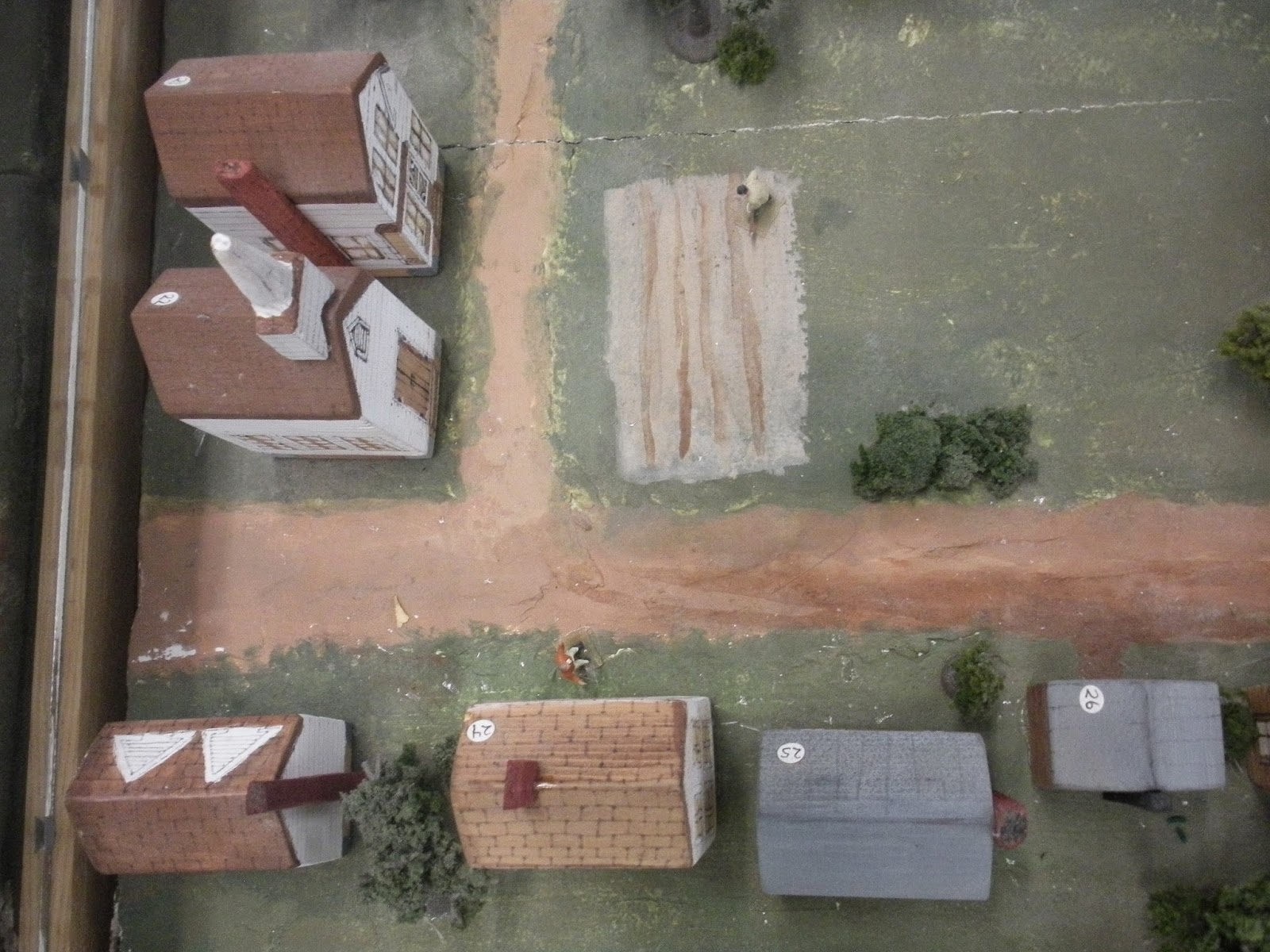
An interesting twist occurred in researching the Appalachian Roots Series. When I taught at Oakboro Elementary School, I also served as leader for the Oakboro Junior History Club. In order to get to attend the Tarheel Junior Historian Awards Day in Raleigh, a student had to submit a project. Blake Williams submitted a model of the early town of Big Lick. When I was writing  Transplanted to Red Clay, the fourth and final novel in the series, I used this model to help in my research, since the book is mainly set in Big Lick in Stanly County, NC.  This model is still on display at the Oakboro Regional Museum of History. So, the teacher used her student’s work as part of the research for her book. I never imagined such a thing might happen when the projects were submitted.


________________________________________________________________
 

Tuesday, August 19, 2014


How I Became a Writer

I grew up in the foothills of the Appalachian Mountains (Wilkes County), and my parents and relatives came from the Appalachians. Part of that heritage was an oral tradition of storytelling. Mother was the storyteller in my family, although Dad had a few of his own, especially funny ones.

I began writing my stories in about the third grade, and poetry started about seventh grade. Personal writing stopped during college at Appalachian State University in Boone, NC (back to my roots). Marriage and a family followed, and I didn’t start writing again until I’d finished my Master’s Degree.

I was teaching at the time, and I didn’t have time for extensive projects, so I wrote magazine articles. My first one about the tradition of quilting in North Carolina sold to The State Magazine the first time I sent it out. I received plenty of rejections after that, but having one published kept me going, and I’ve published in over forty magazines.    
       
Ironically, when I retired from teaching, I quit writing for a while, because I spent a lot of time traveling. When my mother became sick and I took on the role of caregiver, I had time to sit down and write my first novel. Isn’t it amazing how God uses bad situations for good? I’ve completed eleven manuscripts so far, and have lots more in mind. I love the journey and marvel at God’s gifts and blessings.
                _______________________________________


Monday, August 18, 2014

What Was Lenoir, NC First Known As?

When I researched some of the locations I used in my novel, Cleared for Planting, I found some interesting bits of history or trivial. Some of it has to do with what would later become Caldwell County, North Carolina. In the book, Emma Cagle and her family travel from the flatlands of North Carolina to a small mountain farm out from Grandfather Mountain. On their way, they stop at Tucker’s Barn to get their wagon repaired.

In the 1760’s, a Tucker family settled near Lower Creek in what would later become Caldwell County. As the area grew, the Tucker homestead became a gathering place. Some of the events held there included voting, military practice, speeches, dances, and special celebrations. One musician even composed a piece called “Tucker’s Barn.” The Tuckers also ran a store on their property for a while, and the entire community became known as Tucker’s Barn.  In 1791, this area had nearly 3,000 people.

When Caldwell County was formed in January 1841, commissioners studied possible sites for the county seat and decided on Tucker’s Barn, because it had a larger concentration of people. The new town was named “Lenoir” after the Revolutionary War General, William Lenoir, who had once given a Fourth of July address at Tucker’s Barn.
         ___________________________________________
  

Sunday, August 17, 2014

The Appalachian Roots Series

Since Cleared for Planting, the novel being published, is the first in a series of four, I thought you might like to see a synopsis of the other three. I've tried to write the summaries so they don't reveal too much and contain spoilers. If Cleared for Planting sells well, the others in series will be published as well.


* Appalachian Roots *
An inspirational, historical series


   Cleared for Planting – (see the first blog post below)

   Sown in Dark Soil -
Leah Morgan grew up on a plantation in Anson County, North Carolina, as her father’s favorite, while Mother favored her older sister, Ivy. When their father dies and Mother tries to force them to marry men they don’t want, they leave with Ivy’s secret fiancé to go to his home in the Appalachian Mountains. On the journey, Ivy’s petty selfishness comes out, and Luke begins to have reservations, but he feels God wants him to keep his word. Even his Granny Em likes Leah better, and she’s a shrewd judge of character. Ivy runs away, but Luke feels he needs to find her and make sure she’s okay, because he feels responsible.  As obstacle after obstacle surround them, will Ivy always stand between Leah and Luke, even as their feeling for each other grow?

   Uprooted by War -                                     
When the Confederacy begins conscription, Luke goes over the mountains to Tennessee to join the Union army, and they all rely on their faith to get them through. He fights in several battles, like Antietam, with only minor injuries but is captured at Gettysburg and sent to the Salisbury prison. He’s unable to contact any of his family and ends up in the horrors of Andersonville. In the meantime, those left on the farm are trying to survive amid raiders and scavengers. Will they all be able to persevere, or will the war tear them apart and take some of their lives as it has in so many other families?

   Transplanted to Red Clay -                        

Rachel goes to stay with her Aunt Ivy in Stanly County, North Carolina. Ivy’s first husband was killed in the war, and she’s married the man she once ran away with. Patrick, Ivy’s oldest son, has always been fond of Rachel, but he’s surprised by the way his sixteen-year old half-cousin looks now. He knows he’s falling in love with her, but struggles with the issues involved. Others are also interested in Leah and in Patrick’s sister, Hope. One admirer is rumored to be a member of a gang led by Jesse James. Rachel fills in for a school teacher and tames some wild students, but Blanche, the local beauty, is jealous of Rachel and stirs up trouble. When a criminal makes plans and the KKK objects to Rachel’s heritage and how she treats blacks as equals, the situation becomes dangerous for Rachel, Patrick, and Hope.