Wednesday, August 19, 2015

Yogurt


Yogurt is a food made from the bacterial fermentation of milk. People have been discovering its health benefits for years. For example, when my husband and I served as missionaries in southern Mexico for a year, I ate yogurt, because its good bacteria helped combat the bad bacteria that's so prevalent there and causes upset stomachs. I never got sick the whole time, but I took other precautions, too.


Fruit with yogurt

When I taught school, I usually took lowfat yogurt, fruit, and a few animal crackers for lunch, because I knew I didn't need to eat a lunch high in calories or fat. Yogurt has properties that aid in weight loss, too. It's also good for strengthening bone density.


Yogurt has a long history.  Ancient Indian writings talk of yogurt with honey being called "the food of the gods." Other traditions say that Abraham's longevity came from eating yogurt regularly (Edward Famworth, Handbook of Fermented Functional Food, 2008, p. 114). It's also been reported that "the land flowing with milk and honey" in the Bible actually meant a yogurt drink (Melanie DuPois, Nature's Perfect Food, 2002, p. 29). Ancient Greeks ate a dairy
product they called "oxygala," which may have been a form or
yogurt. The oldest known writing that mentions yogurt comes
from Pliny the Elder who said some nations knew how "to thicken the milk into a substance with an agreeable acidity" (John Bostock and Henry Thomas Riley, The Natural History of Pliny, vol. 3, p. 84). Several books written in medieval times mention the word "yogurt," especially in reference to the nomadic Turks, and the word comes from their language.


Today most grocery stores carry several kinds of yogurt, and there's recipes on how to make your own. In addition, yogurt can be used in almost every category of dish from sauces to entries to desserts. It's a very versatile food that's also good for you.
____________________________________


Tuesday, August 18, 2015

Cades Cove


Cades Cove in easternTennessee has become one of the most popular spots in the Great Smoky Mountains. Not only does it have great scenic views, but there's a good chance of seeing wildlife. White-tailed deer, black bears, wild turkeys, and coyotes are commonly seen. You can drive an eleven-mile loop and stay in your vehicle, or get out at stops along the way. If you like to hike or bicycle, the area offers plenty of trails. In fact, only walkers and bicyclists are allowed on the trail until 10:00 a.m. Camping is also available.


Surrounded by mountains, the valley has a rich history. The Cherokee hunted the area, but no villages have been found. The first settlers arrived between 1818 and 1821.  The 1830 census shows 271 people lived in the cove. Visitors can also tour some of the historic, mountain buildings and get a sense of what the isolated place may have been like years ago.


I've read the Smokey Mountain Dreams series by Sandra Robbins. They're set in Cades Cove, and I would highly recommend them for good, Christian fiction. They will give you an idea of what the area was like before all the tourist found it. However, today Cades Cove is managed by the National Park Service, and they try to maintain its pristine qualities.


The Smokey Mountain Dreams series somewhat reminds me of my Appalachian Roots series. Both are set in the Appalachians, yet they're each special in its own way. Whether or not you read the books, however, Cades Cove is definitely worth seeing.


____________________________________


Monday, August 17, 2015

Toys in Colonial America


Children often had more responsibilities in Colonial America than they do today, but there was still time for some play. Children from wealthier families had more toys bought for them, but most of them also improvised and made toys for themselves. For example, Indian children made cornhusk dolls, and settlers learned to do the same. In poorer families, all of the toys were usually made at home.


Some of the toys and recreation prepared children for tasks they would need later. This was especially true for older children, but a child learned skills much earlier than we would expect today. Sewing is a good example of this. Girls often began learning to sew around age five, and boys engaged in some form of target practice, which would help them become able hunters.


Early toys included such items as jump ropes, rag dolls, clay marbles, quoits (ring toss), hoops, nine pins, whirligigs, tops, jig doll, cup and ball, and draughts (similar to checkers). Older boys might play with cards or dice, but parents often frowned on this, and gambling was illegal in most of the colonies. Toys might have been more limited in colonial times, but children found ways to have fun.


________________________________________

Sunday, August 16, 2015

Marriage in America


Therefore shall a man leave his father and his mother, and shall cleave unto his wife, and they shall be one flesh (Genesis 2:24).


Some incidents happened recently that got me to thinking about couples and marriage. Marriages in our society seem to be becoming more and more rocky and troubled, with many dissolving altogether.

... a prudent wife is from the Lord (Proverbs 19:14b).


A few years ago, an older couple in the church Jim and I attended were hosting a guest speaker in their home. The speaker made the comment that no matter what the husband said, his wife found a way to disagree and argue with him. This isn't the way married couples should live.

And he answered and said unto them, Have ye not read, that he which made them at the beginning made them male and female, and said, for this cause shall a man leave father and mother and shall cleave to his wife: and they twain shall be one flesh? Wherefore they are no more twain, but one flesh. What therefore God hath joined together, let not man put asunder (Matthew 19:4-6).


In a recent situation, I was visiting with a couple, who were apparently having problems. Although they tried to hide it from me and act as if nothing was wrong, the tension was too thick to even cut with a knife. Instead of working together and being on the same team, they were opposing each other. Proving they were right and getting their way had taken priority, and all phases of their marriage were suffering

And from the beginning of the creation God made them male and female. For this cause shall a man leave his father and mother, and cleave to his wife; and they twain shall be one flesh. What therefore God hath joined together, let not man put asunder (Mark 10:6-9).


At another time, I was going to be traveling to promote my book for two weeks, because I had two back-to-back events. Of course, as a pastor, Jim rarely gets to travel with me, but we decided that he'd come up after Sunday services and leave Wednesday morning in time to get back for the evening Bible study. A very strong Christian man seemed so surprised that we did this. He finally shrugged and said that it was good we still liked to be together. I was shocked, because he's been married for a number of years. Did he mean he and his wife didn't like to be together? How sad!


Let thy fountain be blessed and rejoice with the wife of thy youth. Let her be as the the loving hind and pleasant roe; let her breast satisfy thee at all times; and be thou ravished always with her love (Proverbs 5:18-19).


The above examples is not how God wants married couples to behave. When it happens, one or both are usually wrapped up in their own selfish expectations. As Warren Wiersbe states in Be Mature, "God's wisdom makes the believer agreeable and easy to live with and
work with" (kindle loc. 1354). The best way to have a strong marriage is to put Christ at the center of it. The more I love Christ and submit to His will, the more I love those around me, including my husband. And, God's love flowing through me is unconditional. Who is at the center of your world? Be honest. Is is Christ or is it you?

Though I speak with the tongues of men and of angles, and have not love, I am become as sounding brass, or a tinkling cymbal. And though I have the gift of prophecy, and understand all mysteries, and all knowledge; and though I have all faith, so that I could remove mountains, and have not love, I am nothing, And though I bestow all my goods to feed the poor, and though I give my body to be burned, and have not love, it profiteth me nothing.
Love suffereth long, and is kind; love envieth not; love vaunteth itself, is not puffed up, doth not behave itself unseemly. seeketh not her own, is not easily provoked, thinketh no evil; rejoiceth not in inquity, but rejoiceth in the truth; beareth all things, believeth all things, hopeth all things, endueth all things. Love never faitleth.... (1 Corinthians 1: 1-8a, KJV with "charity" translated as "love").

________________________________________

Saturday, August 15, 2015

Sown in Dark Soil Announcement


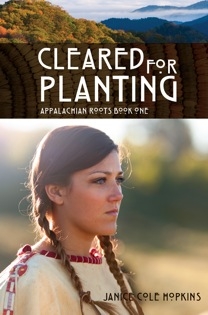
 I am excited to announce that my second book in the Appalachian Roots series, Sown in Dark Soil, is now available for pre-order on Amazon. Amazon is saying it will be ready to ship on September 22. One can hope, but I have my doubts. It took four months for the printing of the first book, Cleared for Planting, and this one just left for printing Monday. With Amazon, the price will go down the more people that order, and you'll get the lowest price at the time of shipping.


All my novels are stand-alones, and this series follows the same family. However, if you read more than one, you'll want to read them in order, so there won't be spoilers. I've reworked the Amazon description a little for this new book to give you an idea of what it's about:

The Appalachian Mountains are a beautiful place for life and love, but they can prove harsh and treacherous to the inexperienced.

After the death of their father, Ivy and Leah Morgan are suddenly being pressured into unpleasant, arranged marriages. Ivy, however has other plans. She's fallen in love with Luke Moretz and plans to run away with him to his farm in the Appalachian Mountains. He says she must have a chaperone, and she asks Leah to go with her. At least, this will get them away from their mother's demands.


The Morgan sisters leave with Luke, but, along the way, tensions grow between Luke and Ivy. As more and more of Ivy's true nature comes out and her dislike for the mountains grows, Luke must decide whether to keep his promise to Ivy or follow his growing attraction to Leah. In the meantime, Leah finds herself loving all the qualities about Luke that her sister wants to change.

The situation becomes confusing, and relationships are tested. Hasty decisions lead to danger and unfortunate circumstances that put any future happiness at risk. Will this journey bring the sisters together or drive them farther apart than they could ever have imagined?

These are historical, Christian novels, and all of my profits go to a scholarship fund for missionary children. I pray that God will use the books and the funds for his glory and kingdom.
________________________________


Friday, August 14, 2015

History from the Mabry-Hazen House


This lovely house was built in 1858 on top of Mabry's Hill in Knoxville, Tennessee. It served as headquarters for both the Union and Confederate troops during the Civil War and housed three generations of the same family until 1987. I found the guided tour to be excellent and the docent to be one of the most knowledgeable that I've had.


Built in the Victorian Period, the house presents both Italian and Greek Revival features. It also holds one of the largest collections of original family antiques in America. As such, it offers a rare glimpse into the Victorian and Civil War eras. The house tells many stories, such as ones from the Civil War in an area with about half Confederate supporters and half Union sympathizers, of a gunfight over conflicts, and a Breach of Promise lawsuit over a perpetually postponed marriage.


When the Civil War began, Joseph Mabry, Jr., a wealthy Knoxville businessman, pledged to personally outfit an entire Confederate regiment at a cost of around $100,000. Because of this, he was awarded the honorary title of Confederate General. However, when the Union controlled the area, his business sense demanded he be friendly to them, too. In fact, the Union forces probably had the greatest impact when they set up their headquarters in the house and fortified the grounds as part of their Knoxville strategy.


Mabry died in 1882, and his daughter Alice and her husband, Rush Strong Hazen, occupied the house. Eventually, their youngest daughter, Evelyn, lived there with only her dogs and cats until her death in 1987. Her will stated that the house was either to become a museum or be demolished. It opened as a museum in 1992.

Open Monday - Friday, 11:00 am - 5:00 pm
          Saturday, 10:00 am - 3:00 p.m.
          Sunday, closed

Admission - $10 for adults, children under 18 free

____________________________________________________________


Thursday, August 13, 2015

History of the Hezekiah Alexander House


Now located in Charlotte, North Carolina, the 5,000 square-foot, rock home was quite a mansion for the backwoods where it was built in 1774. The house is reminiscent of early homes Germans built in Pennsylvania. In fact, many German immigrants moved from Pennsylvania into North Carolina. Today, this is the oldest surviving building in Mecklenburg County.

Hezekiah Alexander had been born in Maryland sometime around 1725. In 1767 he bought over 300 acres on Sugar Creek and built his house there in 1774. He first worked as a blacksmith and later became a farmer, but he had several noted accomplishments. For example, he served in the Fifth Provincial Congress, which wrote North Carolina's first constitution and as a trustee of Queens College. He was also appointed a county magistrate by Royal Governor William Tryon, signed the Mecklenburg Declaration of Independence, helped draw up the Mecklenburg Resolve, and
served on safety committees.

Hezekiah married Mary Sample, and they had 10 children, 8 boys and 2 girls. He died July 16, 1801. His house still stands today as a museum and memorial to his life. Guided tours are Tuesday - Saturday on the hour from noon until 4:00 p.m. with an admission fee.
____________________________________