Monday, December 7, 2015

The Bombing of Pearl Harbor


Today is a well-known, infamous day in history. December 7, 1941, the Imperial Japanese Navy launched a surprise attack on Pearl Harbor, the American naval base in Hawaii, bringing the United States into World War II. The Japanese wanted to take control of Southeast Asia and felt they needed to cripple the United States, which they expected to oppose their aggression. Over a 7-hour period, there were also attacks on places held by the United States in the Philippines, Guam, and Wake Island, as well as the British ones of Malaya, Singapore, and Hong Kong. 


The attack on Hawaii started on the Sunday morning at 7:48 Hawaiian time. 353 Japanese military planes launched from 6 aircraft carriers in two different waves. All 8 U.S. ships were damaged and 4 sank. All, except the Arizona, were later raised. The enemy also damaged or destroyed 3 cruisers, 3 destroyers, a training ship, and one minelayer. 188 U.S. planes were destroyed, 2,403 Americans were killed, and 1,178 were wounded. Japanese loses were light in comparison.


The next day, the United States declared war on Japan. On December 11, Germany and Italy declared war on the United States, so the nation entered the war on all fronts. There's evidence that clues had been coming in and reports had been warning of such an attack, but no one in authority took them seriously. The act certainly took most Americans by surprise. As President Franklin Roosevelt so aptly proclaimed, December 7, 1941, was a "date which will live in infamy."  


Sunday, December 6, 2015

What Do You Live For?


If most of us are truly honest, when the facade is stripped away, we really live for ourselves. Taking care of ourselves and those we care about is our priority, but, as Christians, it shouldn't be. The first mandate in the Ten Commandments tells us, "Thou shalt have no other gods before me" (Exodus 20:3). Jesus said, "Thou shalt love the Lord Thy God with all thy heart, and with all thy soul, and with all thy mind" (Matthew 20:37). Are we our own gods, or is it money, possessions, hobbies, power, or something else? Are you putting God first and living for Him? Do you love Him the way Jesus commanded?

"The church must get back to influencing society for God, but in order to do this we must get back to living for God ourselves" (David Fioraza, The Cost of Our Silence. ???, kindle location 1289)
.
Living for God requires a total surrender to him, and this is hard for us. We like to think we are in control, but, no matter what we think, God is always in control. It comes down to a trust issue. If you truly trust in God, then you know His goodness and that He always wants what's best for you. Trusting in God is a choice. If you choose to do so, He will grow your faith, trust, and love. The more you love Him and others, the more faith and trust you will have. The more faith and trust you have, the more you will love Him. It is a wonderful cycle that allows for total surrender.

But seek ye first the kingdom of God, and his righteousness, and all these things shall be added unto you (Matthew 5:33).


The percentage of Christians is dwindling in the United States. Our country needs bold Christians who take their faith seriously and put God above everything else. We need to be sure we pass down a strong faith to the following generations. The United States needs to recognize it's "one nation under God" again, and this needs to begin with each one of us. So, who do you really live for?

Ye cannot serve God and mammon (Matthew 6:24b)
____________________________________


Friday, December 4, 2015

Writing My Civil War Novel


When I began writing Uprooted by War, the third novel in my Appalachian Roots series, I had several concerns. I needed to show some of the horrors and hardships of the Civil War without the book becoming too depressing or gloomy. I wanted to, not only show the problems facing the soldiers but also the families back home. And, those in the Appalachians had some threats specific to that region. In addition, I chose to have good and bad characters on both sides, while showing that slavery was wrong.


I think I had more difficulty keeping a balance in the prison scenes than any other portion of the book. Of course, the research was crucial. I hit roadblocks in trying to research the Salisbury prison. There is general information, but I couldn't find enough specific details. For one thing, so many of the records had been destroyed. However, I used what details I could find and fictionalized (using my background in history) the ones I needed and couldn't find.


Another problem came from the fact that my main characters were going to be separated for much of the book. I used secondary characters to play out their own stories and help move the story along. I think it must have worked, because one of my beta readers said this was the best one yet. Maybe it's because my concerns caused me to work more on it. 

As always, all my profits from the books go to a scholarship fund for missionary children.
_________________________________________________________


Model Trains


According to experts, model trains are different than toy trains. Toy trains are a cheap representations of a train, but makers of model trains are concerned with gauge, accuracy, and being as true to the original as possible in a scaled down version. Model trains can be expensive.


Photo taken at home of Pat & Jimmy Matthews
Collecting the actual train and its cars are only part of the fun for model train enthusiasts. How they are displayed and the items that make up the setting are just as important. In this way, every display is unique and shows the creativity of the collector.

Of course, since trains were not prevalent until the 1800's, model trains are not as old as some toys. German craftsmen made the first miniature trains in the 1830's. The early ones were made by pouring molten tin or brass into a mold, and the train had to be pushed along the track. The French copied the idea, but made elaborately decorated models. When the Industrial Revolution hit England, toymakers there took model train making seriously. Sir Henry Wood built one of the first steam powered toys. European
clock makers then began to fit the toys with clockwork mechanisms to make them go. All these trains were handcrafted, tended to be pricey, and none of them were made to scale.


Photo taken at home of Pat & Jimmy Matthews
It was the U.S. toymakers that began to mass produce small trains, which made them more affordable. George Brown & Company of Connecticut is believed to have made the first self-propelled model train in the U.S. in 1856. America was a big country, and their models needed to be durable to ship over long distances. 1860-1890 is considered the golden age of American tin models, and even middle-class families could afford them. As the demand grew, so did expectations for realism. When Lionel began producing electric models in the early 1900's, model train collection really took off. After WW II, the models became more detailed and functional.


Photo taken at home of Pat & Jimmy Matthews
Many model train enthusiasts started their collection as children, when they received them as gifts. Adults have become interested from their children's or grandchildren's interest. Untold numbers of model trains have sat under Christmas trees to surprise children on Christmas morning. Even today, they've remained popular.


Photo taken at the home of Pat & Jimmy Matthews
______________________________________


Thursday, December 3, 2015

West Jefferson


West Jefferson, North Carolina, has a unique culture and atmosphere. Set in the Appalachian Mountains, it definitely has the mountain influence. There's a folksy, quaintness to the town that's charming, and its support of the arts is evident. It's developed an important tourist business, and the historic district is listed on the National Register of Historic Places.


The town is in Ashe County adjacent to the county seat of Jefferson. It was established in 1915 and became a major stop on the Norfolk and Western Railroad, which was a factor in its birth and growth. A little over 1,000 people reside in the town now.
At one time, West Jefferson had the only cheese factory in the Southeast, and the cheese facility still operates today. It's also home to West Jefferson Dr. Pepper, a soda manufacturer, who make Dr. Pepper and Mountain Dew. It is only one of two non-Pepsi companies who are allowed to produce Mountain Dew and is known for using nothing but pure cane sugar instead of high fructose corn syrup in their regular drinks.


So, if you're ever in the area, visit the town, walk the village-looking streets, shop the unique stores, eat in a quaint restaurant, listen to some street musicians, and maybe catch a street festival or sale. Then, you can kick back in a rocking chair or on a bench with a Dr. Pepper or Mountain Dew and watch the tourists go by. 


__________________________________________________________


Wednesday, December 2, 2015

Yo-Yos 

The yo-yo is an old toy. An ancient Greek vase from 500 BC shows a boy playing with a yo-yo. Greek records describe them as being made of wood, metal, or terra cotta, a fired clay. They have been played with in Europe for ages.


They also came to the American colonies. The Blount House in Knoexville, Tennessee, built in the late 1700's has them on display. However, the toy really became popular in the 1920's. In 1928, Pedro Flores, an immigrant from the Philippines, opened a yo-yo factory in Santa Barbara, California. Before 1929 ended, he had opened addition factories in Los Angles and Hollywood.


Not long afterwards, another entrepreneur, Donald F. Duncan, bought the yo-yo manufacturing business from Flores. In 1932, Harvey Lowe won the first world yo-yo championship in London. Other yo-yo makers came upon the scene, but the Duncan yo-yos would remain the best known ones. The 1960's saw another resurgence of the yo-yo, and this didn't wane much until the end of the 1980's. They're still available today.
_____________________________________

Tuesday, December 1, 2015

Themed Christmas Trees


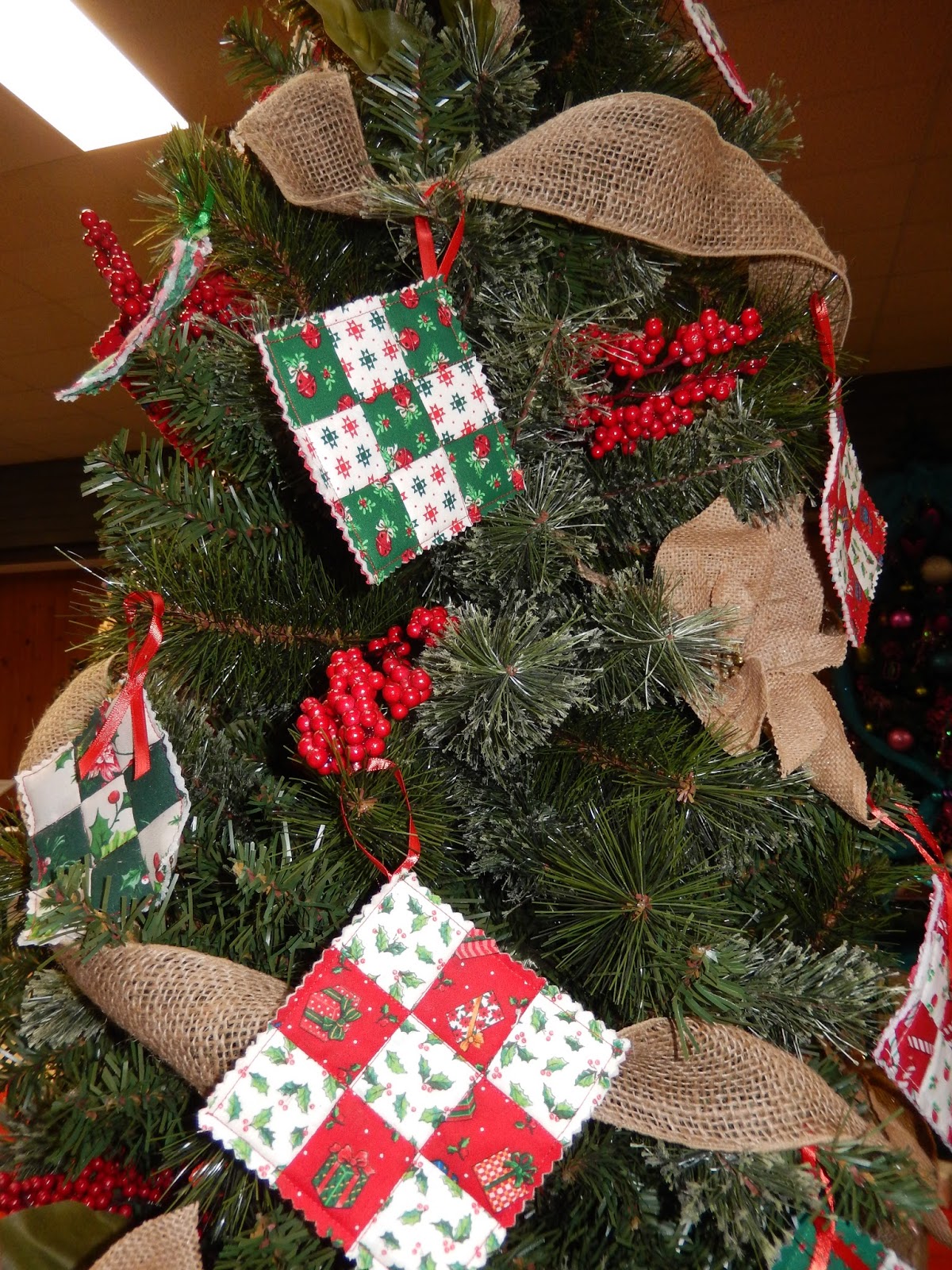
Perhaps it comes from having taught in elementary school for some of my teaching career, but I love to decorate themed Christmas trees. For example, the Christmas after my husband and I came back from serving as missionaries in Oaxaca, Mexico, I did a tree with a Mexican theme. Apparently I don't have digital photos, since I couldn't find them, but I had chili pepper lights, and ornaments representing different aspects of life there. I think it may have been one of my favorites.
.
A lot of my trees have a country theme, because I'll always be a country, mountain girl at heart. However, sometimes, I like to change things and have a golden theme or a more sophisticated look. In years past, I've had more than one tree in the house. However, now I seem to be doing good to put up one. Not having children or grandchildren close enough to visit me during Christmas has influenced this, but I still have fun with it. Here are some other themed trees (not all are mine):


_______________________________________