Monday, September 21, 2015

Some Cabins at Cades Cove


Peaks of the Appalachian Mountains guard Cades Cove like sentinels, seeming to offer some protection for the valley. Families began trickling into the cove around 1818. One of those first families was the Olivers. John and Lucretia Oliver arrived in 1818 and spent their first winter in an abandoned Cherokee hunting hut. In 1822 they constructed a cabin in front of it. In 1826, the Olivers bought land, and John built a wedding cabin for his son.


Dan Lawson built a cabin in 1856, after he purchased the land from his father-in-law, Peter Cable. The most unusual feature is the brick chimney, because most were built from stone. The clay was gathered and the bricks made on the site. Originally it was constructed of logs, but additions were added with milled lumber. It also has a granary and smokehouse.


Colonel "Hamp" Tipton built a house in Cades Cove in 1870, but he never lived there. He'd fought in the Mexican War and returned to live in Tuckaleechee Cove. However, two of his daughters, Lucy and Lizzie, lived in the cabin when they taught school in the Cades Cove. James McCaulley also rented it for a time before he bought his own property in the cove and built his own house. 


Carter Shields had fought in the Civil War, was wounded at the Battle of Shiloh, and remained crippled for life. When he returned from the war, he married and moved to Kansas. He came back to Cades Cove in 1906 and bought property in 1910, but he only lived there for eleven years before he left again. Even with the houses built in these later dates, they still showed a primitive lifestyle of years earlier.
_____________________________________


Sunday, September 20, 2015

How to Be Content

The fear of the Lord tendeth to life; and he that hath it shall abide satisfied; he shall not be visited with evil.

We seem to be living in a time of discontent. Few people seem to be really satisfied with their life, but yet they choose not to change it. If you're a Christian and still find yourself dissatisfied, perhaps you've fallen into living a mundane, lifeless Christianity. Hopefully, you've not become lukewarm, because the Lord says He will spew you out of His mouth if that's the case.

Not that I speak in regard of want; for I have learned in whatsoever state I am, therewith to be content (Philippians 4:11).


Paul said he was content in whatever condition he found himself. That's because true contentment isn't based on circumstances. It's based in God. Once you establish a close, personal relationship with Him, His pure, unconditional love will overwhelm you, and you'll find that peace which passes all understanding. You'll find yourself wanting to study his Word and looking forward to praying, so you can talk with Him. In The Power of Unlimited Faith, Kynan Bridges says, "The Word of God gives form and purpose to your life" (kindle loc. 204).


And the peace of God, which passeth all understanding, shall keep your hearts and minds through Christ Jesus (Philippians 4:7).

When you think about it, no Christian should be sad most of the time. None of us should be going around burdened and looking as if we're carrying the weight of the world. We have a heavenly Father who wants to carry them for us, and He is a much better Manager of our lives than we are. Why then do we find it so hard to surrender all to Him? When we do, we'll have so much joy and peace, we'll never be discontent for long again. Knowing and obeying God brings contentment.

Whom having not seen, ye love; in whom, though now ye see him not, yet believing, ye rejoice with joy unspeakable and full of glory (1 Peter 1:8).

Saturday, September 19, 2015

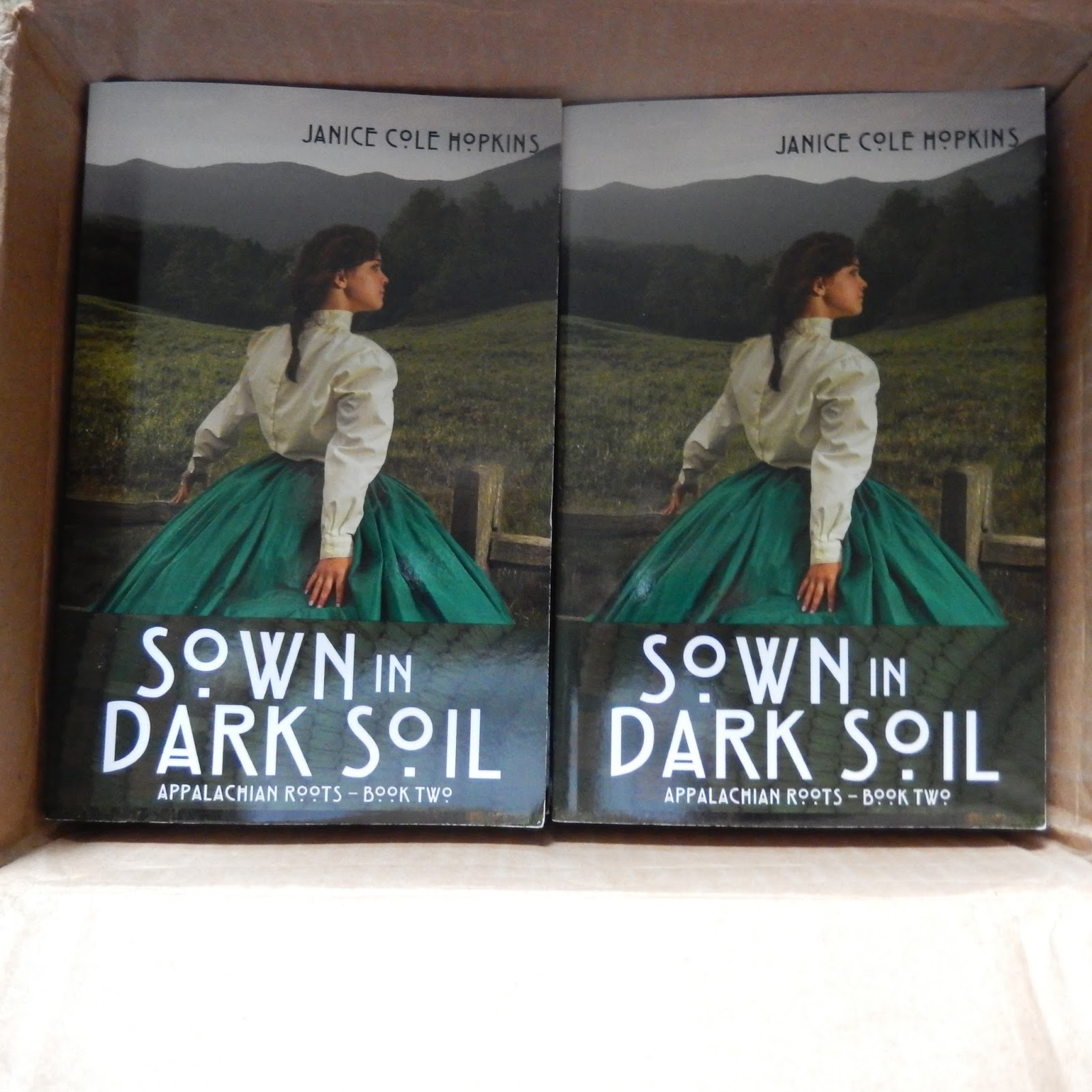
Sown in Dark Soil Shipment Arrives


Last week, Jim and I spent time at The Cove, Billy Graham's Conference Center, just east of Asheville, North Carolina. While we were gone, UPS left the shipment of Sown in Dark Soil on our front doorstep. Luckily the clerk at the local convenience store told a church member that she saw a bunch of boxes outside our house, and it looked like it might rain. He came down, got the shipment, and took them to his house for safekeeping. We got home late Friday, and Billy and his wife brought our books over Saturday.


The odd thing is I still have heard nothing from the publisher, the printer, or the delivery company that the books were dropped off. From the packing slip, I did notice that my publisher used a different printer this time than with Cleared for Planting. This printer was in Pennsylvania, and the last one was in Michigan. The one in Michigan took 4 months to print the book, and the date was extended at least 3 times. This printer got them out at the date first proposed.


It's still exciting to open that crate and see all my new books facing me. Even the new book smell that fills the air is special. I've just finished reading through the manuscript for the 3rd novel in the Appalachian Roots series, Uprooted by War, set during the Civil War. While I'm traveling over the next several days to promote the books, I'm leaving the manuscript with Jim to read through and catch any mistakes that I haven't. Then, I'll go through it at least one more time before I send it to the publisher. Hopefully, it won't be long before I'll be opening boxes of them.
____________________________________


Friday, September 18, 2015

The Bleak House


The Victorian Bleak House was built by Robert Houston Armstrong, a Knoxville lawyer. It was named after the novel by Charles Dickens. Slave labor molded the bricks for the house on the site. During the siege of Knoxville and the Battle of Fort Sanders, late in 1863, the house was commandeered by Confederate Generals James Longstreet and Lafayette McLaws as their headquarters. Today it's owned by Chapter 89 of the United Daughters of the Confederacy.


Rarely am I disappointed in any historical site, but the Bleak House was nothing what I expected. The house itself and its history was interesting, but the policies aren't very friendly to visitors. First, the house is locked, and if a tour is being conducted, you might have to wait outside for as long as an hour. Then, once inside, adults pay $10 to tour the house, but no one is allowed to take photos inside. And, during the Civil War, the house had red brick, but since then they've been painted white. In addition, the house is open for historic tours on a very
limited basis. The property makes its money as an event venue site, especially for weddings. Still, however, it is a beautiful house, and, if you're a history buff like me, you might want to ignore the policies and go anyway. At least you'll know what to expect now.

The Bleak House
3148 Kingston Pike
Knoxville, TN 37919

865-993-3397
http://www.knoxvillecmh.org
___________________________________________________________


Thursday, September 17, 2015

Pie Safes

In earlier times, when a lady baked pies, she usually made several at one time. Fruit pies would usually keep for a few days, and the family would likely eat them quickly. However, she didn't want to leave them setting out where critters could get to them, especially overnight, and there were no special containers to hold them. The answer was the pie safe.

The pie safe was a special cabinet designed to hold pies. It was made from wood with punched tin inserts, at least in the front. Some ingenious homemakers would set the saucers under the legs of the cabinet and fill them with water to keep ants and other insects from invading the pies.

Pie Safes came in many sizes and designs. Some were rustic, where the builder was only concerned with its practicality. Others were elaborate and beautifully designed. However, the family was often more interested in the goodies the cabinet might contain than in its craftsmanship. Today, however, they've become collector's pieces.
______________________________________

Wednesday, September 16, 2015

The Cove


Tucked into the Appalachian Mountains just outside of Asheville, North Carolina, is Billy Graham's Conference Center, The Cove. It's a place where guests can slow down, reflect, and enjoy a slower pace. It's also a place to learn, ponder, and meditate. Somehow, God's hand and voice seem clearer here. The Cove offers seminars to aid in Christian growth, many from well-known, Christian speakers. Participants can stay in the lovely rooms on site and eat well-prepared meals from the cafeteria if they choose. 


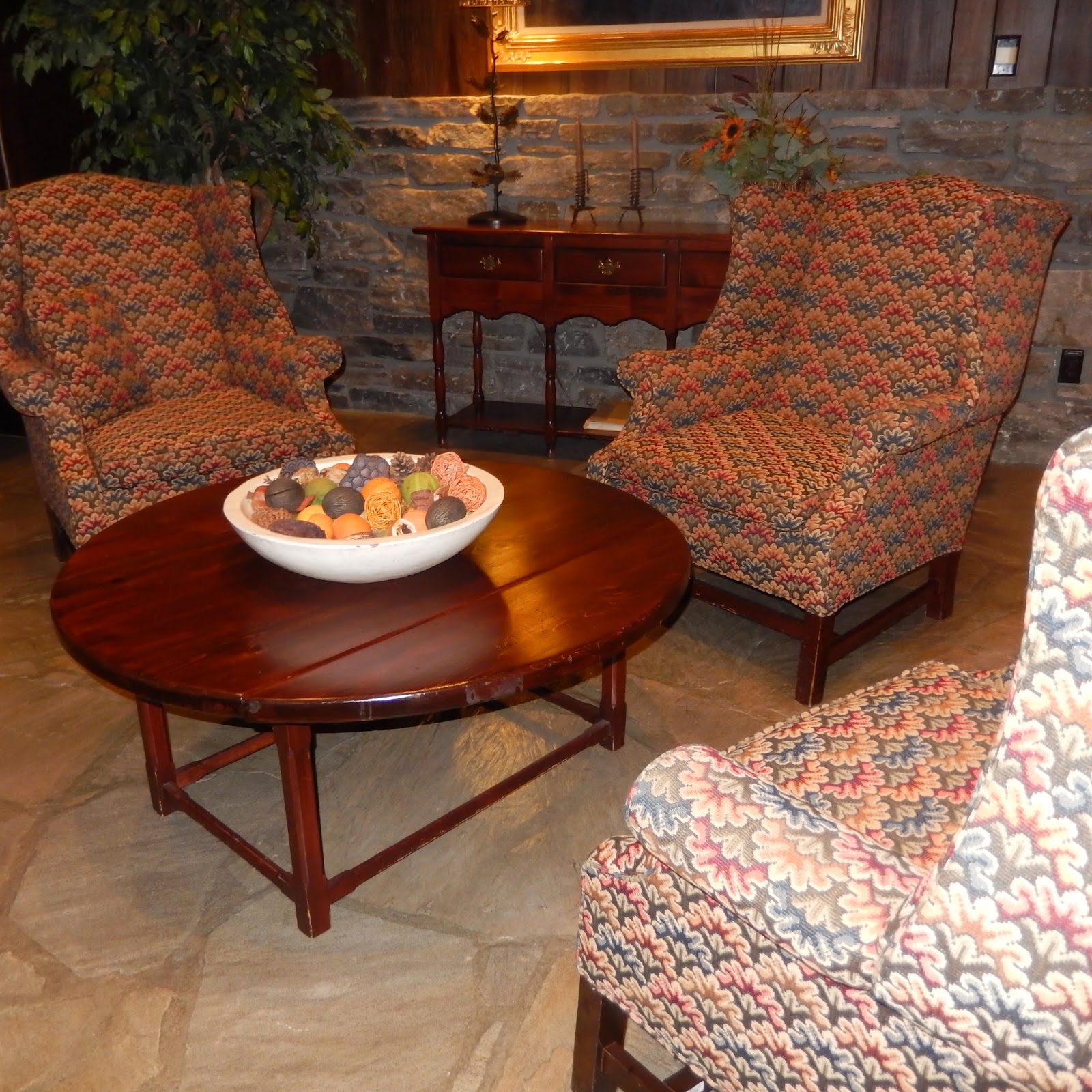
It doesn't take long to realize how much the center wants guests to feel comfortable. Volunteers are posted all about to answer questions, and a bus is ready to cart people up the hills, like to the chapel and back. Umbrella stands are posted at major entrances in case one of those infamous afternoon showers hits. The complimentary coffee urns stay busy in the mornings as do the soda and yogurt machines throughout the day. There's also beautiful landscaping, flowers, and conversation areas.


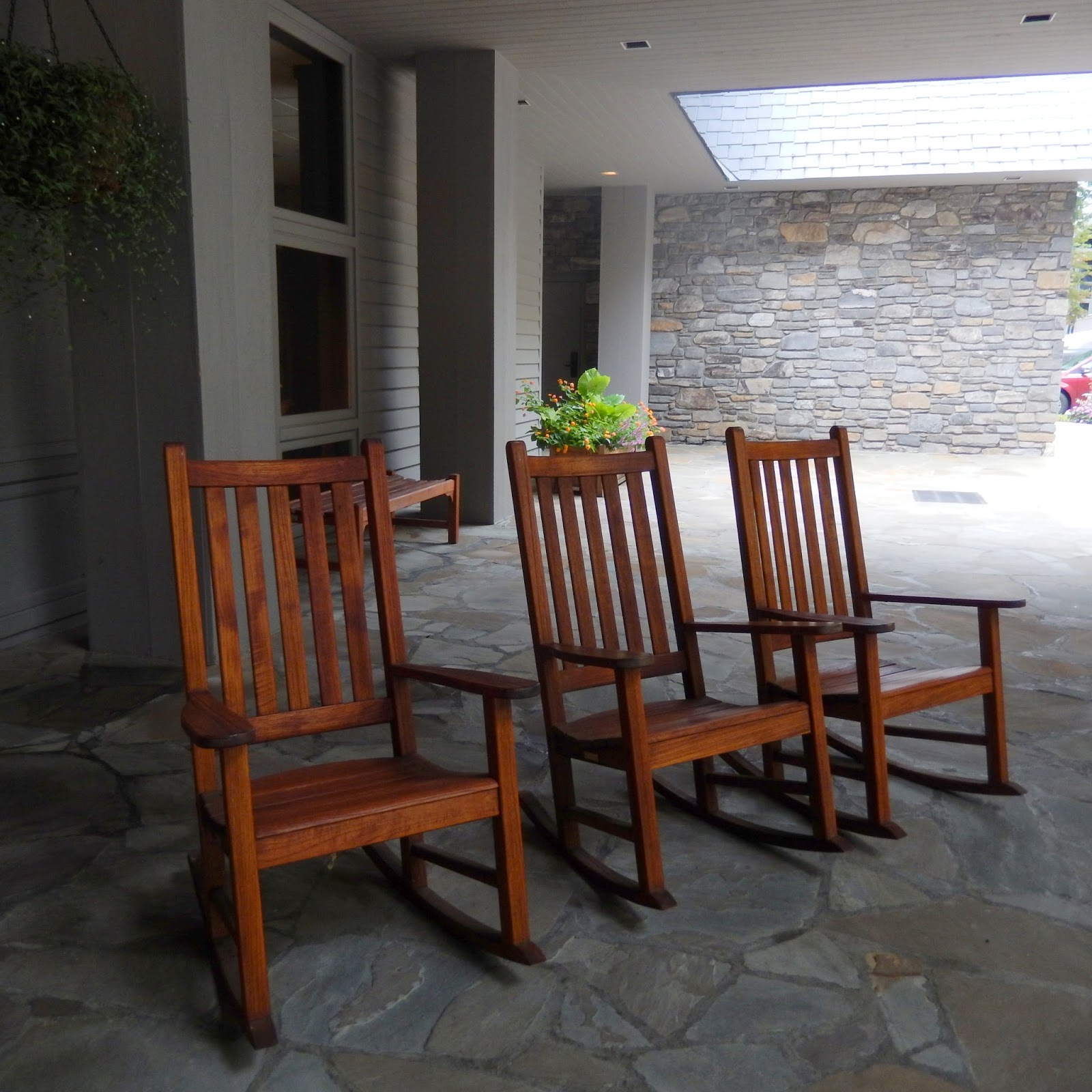
On the 1,200 acres, there's trails to walk, views to enjoy, and rocking chairs or benches that's bound to call your name. If you're looking for a different kind of retreat or vacation where you can learn something, rest, and enjoy spectacular scenery, keep The Cove in mind. I predict you'll come away inspired.


__________________________________________________________


Tuesday, September 15, 2015

Coverlets or Counterpanes

Coverlet is a term for a bedspread that dates from the 13th century. Counterpane (mispronounced as "counterpin" in some areas, like the Appalachians) means the same thing and comes from the 15th century. Both were used in rural areas to refer to a woven or lightweight bedspread, other than a quilt.


Even in families that didn't have many resources, a woman usually placed her best bed covering on the top of the bed. For one thing, the bed was often in a visible location, especially in one-room cabins. Displaying the best bed covering was especially true for those who spun and wove, which applied to many in early America. Then, weaving wasn't considered a craft or art, but it was  a necessity. 


Women would collect and share weaving patterns with their neighbors. Plaids were popular, especially in areas settled by the Scots and Irish. However, solid patterns were also common. Expert weavers would produce even more complicated designs. Today some of these remarkable coverlets have been saved and handed down through generations for us to enjoy.


In Sown in Dark Soil, my second historical novel in the Appalachian Roots series, Leah asks Granny Em to teach her to weave some patterns. She had learned to weave on the plantation, but they'd just woven solid cloth to make clothes for the slaves. Ivy, her sister, turns her nose up at homespun material. Today, most of us think it's special.


__________________________________________